

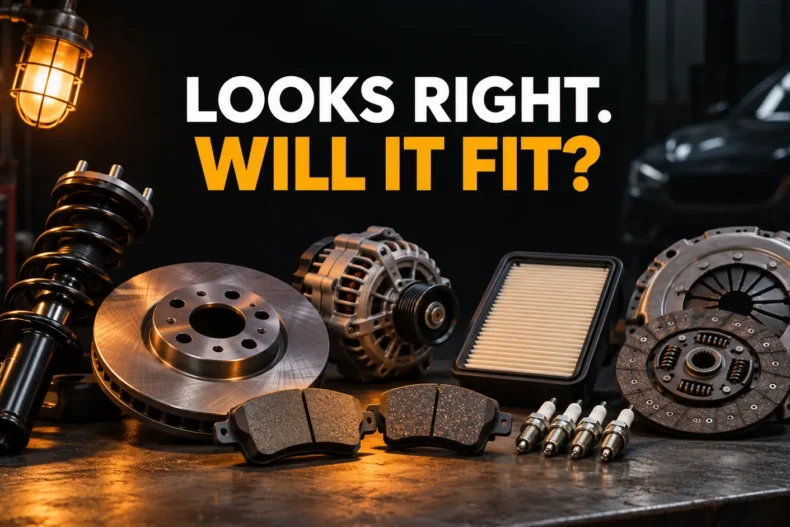
Car Spare Parts Buying Guide: How to Get the Right Fit
The mechanic has taken the old door mirror off your car. You open the box, hold the replacement next to it, and everything looks right. Then you notice the plug. It’s different.
Now you have a car without a mirror, a part you might have to return, and a repair that has to wait. Anyone who’s bought car spare parts based on a photo and a model name can see how easily it happens.
The good news is that you can catch most fitment questions before you order. Start with the information a parts counter would ask for, then check the details that matter for the component you’re replacing.
Start with your car’s exact details.
“Do you have an air filter for a Swift?” is a perfectly reasonable question. Expect the seller to ask which model year and engine you have. That extra detail helps them find the right catalogue entry.
Before asking for a quote on car spare parts, keep your make, model, model year, fuel type, engine, and variant handy. If the catalogue shows several options, the seller or workshop may ask for your vehicle identification number (VIN) to narrow them down.
Then think about the part itself. For a door mirror, tell the seller which side you need and whether yours folds electrically or has an integrated indicator. For a headlamp, ask the workshop to confirm the lighting type and connector. Those details are easier to check while the original part is still in front of you.
Get the part number before comparing prices.
If your mechanic has already removed the old component, ask for a clear photo of its label or markings. Better still, ask them to confirm the replacement part number. You’ll have a specific reference to use when calling the parts shop or comparing listings online.
Sometimes the replacement carries a different number because the manufacturer has updated its catalogue. If that happens, ask the seller to confirm that the newer number officially replaces the old one and fits your vehicle.
This is especially helpful when ordering car spare parts online. Two listings can use similar photos and show very different prices. Once you’ve confirmed the part number, brand and what comes in the box, the prices are easier to compare. A low quote for one item can look quite different once you realise the other quote covers a full set.
How to compare genuine and aftermarket car spare parts
At the parts counter, you may hear genuine, OE, OEM and aftermarket used in the same conversation. The quickest way to understand an offer is to ask which brand is on the box, what the part number is and who handles a warranty claim.
| Option | What to ask before buying |
|---|---|
| Genuine part | Does it carry the vehicle manufacturer’s branding? Can the seller confirm the part number and provide an invoice? |
| Part advertised as OE or OEM | Who made this specific part? What is its product number, and does the catalogue list it for my variant? |
| Aftermarket part | Which brand makes it? Does the seller confirm fitment, and what warranty or return terms apply? |
You’ll need different details for different purchases. A wiper blade calls for a check of the length and mounting type. If you’re ordering a brake, steering or suspension component, have your workshop identify the exact replacement before you pay.
Read the return terms before your car goes on the lift.
Here’s a question worth asking out loud. “Can I return it if my mechanic opens the box and finds it doesn’t fit?”
Some sellers have separate conditions for electrical items, opened packaging or parts that have already been fitted. Find out what applies to your order and what paperwork you’ll need if there’s a problem.
When the part arrives, give your mechanic a chance to compare it with the original before installation. Keep the invoice and packaging until the workshop has confirmed the fit. If something looks different, the part number, label and photos give you a clear starting point for a conversation with the seller.
Frequently asked questions
Can I buy car spare parts using just the model name?
Use the model name to start the search, then confirm the model year, engine and variant before ordering. A seller may ask for the VIN or original part number when the catalogue lists more than one option.
What if the part number on my old component is unreadable?
Share the vehicle details and clear photos of the original component with your workshop or parts supplier. Photos of the label, connectors and mounting points can help them narrow the options and check the catalogue.
What should a workshop include in a parts enquiry?
Send the part number if available, vehicle details, required quantity and whether you need a specific brand. For items sold individually or as sets, say exactly how many pieces or sets you need. If several vehicles are involved, put each vehicle and its parts on a separate line.
Sourcing car spare parts for your workshop or retail business?
Send MKP Group your parts list, vehicle details and required quantities to enquire about availability. If you’re trying to match a part your mechanic has removed, include the part number or a clear photo of the label. One clear enquiry can save a round of calls and help you get the repair moving again.
